
Holiday gatherings give children a chance to practice gratitude, express affection in their own way, and see what it feels like when adults respect their boundaries.
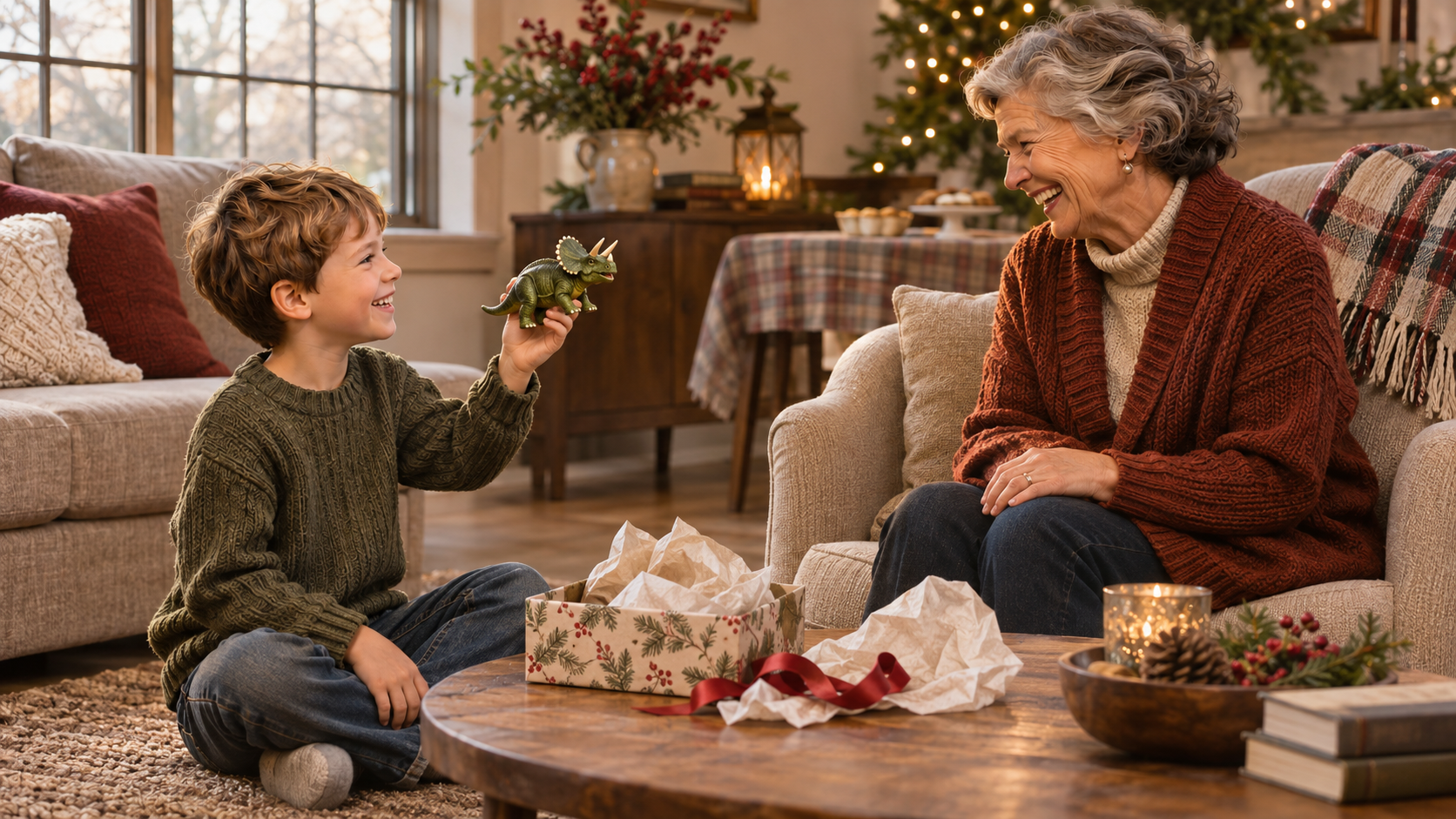
The wrapping paper is still on the floor when Grandma opens her arms. “Come give me a hug!” Your child takes a step behind you, still holding the gift. You want Grandma to know how much her thoughtfulness means, and you want your child to feel comfortable. What do you say?
“You can tell Grandma what you like about the gift. You can wave if you’d like.”
That small sentence gives your child two things at once. It shows them how to acknowledge someone’s kindness, and it gives them a choice about physical affection. Whether your holidays take you to a Thanksgiving table in Polk County, NC, or a family gathering in Upstate South Carolina, these everyday moments are opportunities to teach both gratitude and healthy boundaries.
Help Children Notice the Kindness Behind the Gift
“Thank you” is a good place to start. As children get older, you can help them notice the time, thought, or effort someone put into doing something kind. “Grandpa remembered you love dinosaurs” gives a child something specific to respond to. “Your aunt made those rolls this morning” helps them see the work behind a favorite part of dinner.
You can model that kind of appreciation yourself. Try “Thanks for making room for us at the table” or “It meant a lot that you remembered what she likes.” Children hear what gratitude sounds like when it comes up naturally in conversation.
A child who goes quiet in a room full of relatives may have more to say later. You can thank the person in the moment and give your child a chance to follow up with a drawing, a short note, or a voice message once things settle down. A picture of the dinosaur they’ve been playing with all afternoon can say quite a bit.
Give Children a Choice About Hugs and Kisses
Some children run straight into a grandparent’s arms. Others warm up slowly. The same child may want a hug when they arrive and prefer a wave when they leave. Each time, you can give them room to decide. That’s one way children learn body autonomy, the idea that they have a say in what happens to their bodies.
The American Academy of Pediatrics encourages caregivers to respect a child’s choice about hugs and kisses and to offer alternatives such as a wave or a high-five. A high-five still involves touch, so let your child choose that, too. A spoken hello, a wave from beside you, or a simple “Thank you for thinking of me” are all ways to acknowledge someone.
Pay attention to what your child is showing you. If they pull back or tuck their hands behind them, you can step in with a calm “Let’s wave goodbye today.” Your child can learn that they have your support even when they’re still finding the words.
What to Say When a Relative Is Expecting a Hug
A relative may have been looking forward to that hug all week. You can acknowledge their affection and keep the choice with your child. A few words in a warm, matter-of-fact tone are often enough.
When you arrive — “We’re so glad to see you. Let’s give her a minute to settle in.”
When someone asks for a thank-you kiss — “He can tell you thank you. He gets to choose whether he wants a kiss.”
When someone tries again — “She said she’d like to wave. Let’s go with that.”
When it’s hard to speak in front of everyone — “I’ll thank Uncle Ray with you. We can send him a note tomorrow, too.”
If you expect a relative to take it personally, you can mention it beforehand. “We’re letting the kids choose how they greet people. If he waves from the doorway, wave back. He’s been asking all week when he’ll get to see you.” That gives the relative a way to welcome your child and takes some pressure off the greeting.
Let Children See You Respect Boundaries Both Ways
You can practice this at home. Ask, “Would you like a goodnight hug?” If your child says no, you can say, “Okay. I love you. See you in the morning.” The ordinary way you carry on tells them they’re still loved and welcome after they’ve made a choice about touch. Modeling this kind of exchange is one way caregivers can teach body autonomy.
Children can practice respecting other people’s choices, too. If your child wants to tackle a cousin with a big hug, help them pause and ask first. If the cousin says no, you might say, “You were really excited to see him. You can ask if he wants to play.” You’re helping your child stay connected while listening to someone else’s answer.
And if you hear yourself say, “Go give Grandma a hug,” out of habit, you can adjust right there. “Grandma would love to hear what you liked about the gift. The hug is up to you.” Children get to see adults learn, too.
A Final Word from Steps to Hope
At Steps to Hope, our work with survivors and their children includes advocacy, education, counseling, and support. In families across Polk County and Upstate South Carolina, respect can be practiced in ordinary moments. At your next gathering, that may sound as simple as “Thank you for my gift, Grandma,” followed by a wave, and Grandma waving back.
Help and Support
If you or someone you know is affected by domestic violence or sexual assault, Steps to Hope serves survivors and their children in Polk County, NC, and Upstate South Carolina. Call the 24-hour crisis line at 828-894-2340 or visit stepstohope.org. If someone is in immediate danger, call 911.
